Wireless Charging
My team and I often find ourselves in long conversations with founders that are convinced they need wireless charging. For many first time hardwrae founders, wireless charging makes perfect sense because they are not aware of the trade-offs it brings along.
Wireless charging isn't a replacement for "fast" power; it's a way to get "continuous" or "convenient" power!
From a development standpoint, you aren't just building one product, you're building two. You have to design, manufacture, and certify both the primary device and the charging dock!
You also have to be aware that your production cost will increase.
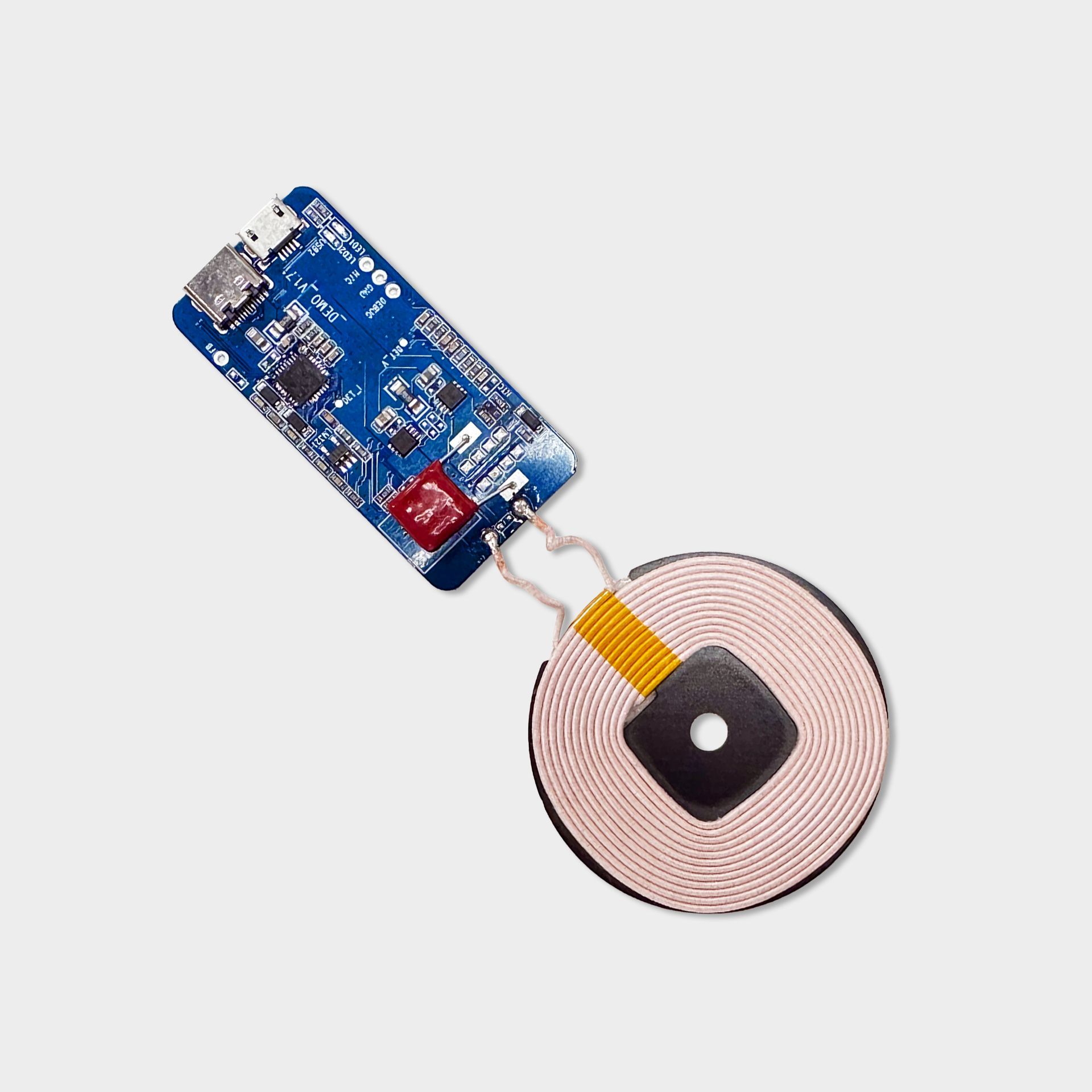
Pros vs. Cons of Wireless Charging
Let's break it down a bit and maybe you will find this useful to make a good decision.
The Benefits
- Design: No charging port means you can create a completely sealed, IP68 waterproof device. No holes for dust or water to get in. From and industrial design point of view the product looks clean.
- Reduced Mechanical Failure: Charging ports (USB-C or Lightning) are common "points of failure." They wear out, get bent, or collect dirt.
- Premium Positioning: In the current market, wireless charging is a shorthand for "high-end." It increases the perceived value of the product.
The Pitfalls
- Thermal Management: Wireless charging is only 70-80% efficient. The lost 20–30% of energy turns into heat. As developers, we have to spend extra time (and money) on heat sinks or firmware adjustments to keep the battery from degrading.
- Bill of Materials (BOM): Adding coils, shielding, and magnets adds cost to your product.
- Certification: Your charging dock also needs to get certified which will require additional engineering efforts.
The Premium Positioning Trap:
Wireless charing sounds intriguing but reality can be different. I once advised a hardware startup and when it came to wireless charging they rejected charging through Type-C. Simply because they believed their product wouldn't be perceived as "Premium" enough.
To make a long story short, they decided to go wireless for their product launch which ended up in a big mess. What seemed convenient and premium to the founders was the exact opposite for their users.
Their users were frustrated because they expected fast charging. Now their users were stuck with a product that they couldn't use for hours! This resulted in bad reviews, a drop in sales and a re-design of the product.
Keep in mind, just because you think it works for you doesn't mean it will work for others. Whenever possible, get feedback from real users during prototype stage.